
Rangiri Dambulla Cave Temple: Sri Lanka’s Largest and Most Significant Cave Temple Complex
Located in the heart of Sri Lanka’s Cultural Triangle, the Rangiri Dambulla Cave Temple is one of the country’s most remarkable historical and religious landmarks. Known for its stunning cave shrines, ancient Buddhist murals, and hundreds of Buddha statues, this UNESCO World Heritage Site attracts visitors from around the world.
Where is Rangiri Dambulla Cave Temple?
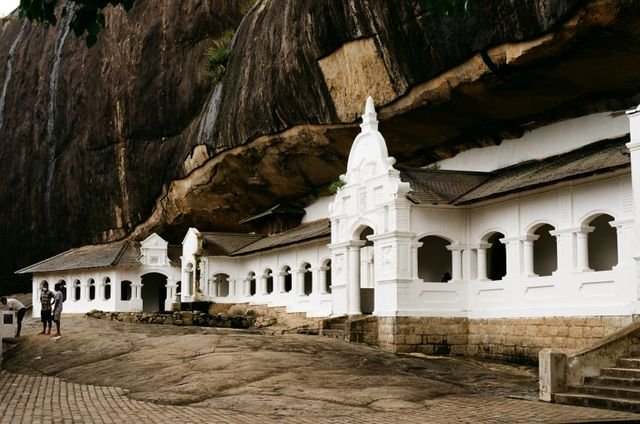
Rangiri Dambulla Cave Temple is located in Dambulla, approximately 150 kilometers northeast of Colombo and just 20 kilometers from Sigiriya. The temple sits atop a massive rock rising about 160 meters above the surrounding plains, providing breathtaking views of the surrounding countryside.
Its central location makes it a popular stop for travelers exploring Sri Lanka’s Cultural Triangle.
A History Spanning Over 2,000 Years
The origins of the temple date back to the 1st century BCE during the reign of King Valagamba. According to historical records, the king sought refuge in these caves for several years after being driven from his throne. After reclaiming his kingdom, he transformed the caves into a magnificent Buddhist temple as an act of gratitude.
Over the centuries, successive kings expanded and restored the complex, creating one of the most significant Buddhist sites in Sri Lanka.
UNESCO World Heritage Status
In 1991, the Rangiri Dambulla Cave Temple was recognized as a UNESCO World Heritage Site due to its exceptional cultural, religious, and artistic significance. Today, it remains one of Sri Lanka’s most visited heritage attractions and an important place of worship for Buddhists.
The Five Main Cave Temples
The temple complex consists of five main caves filled with religious artwork and sacred statues.
1. Devaraja Viharaya
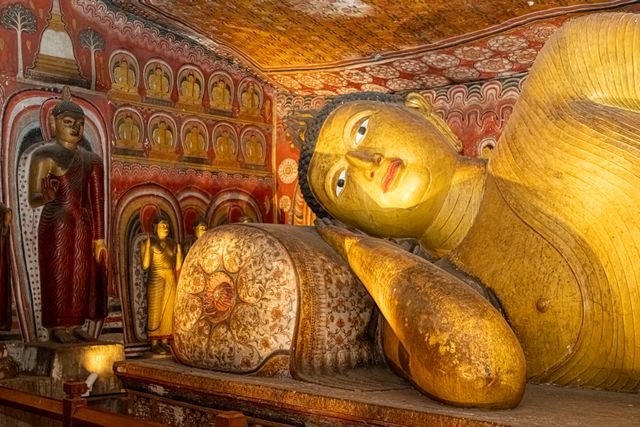
This cave houses a magnificent reclining Buddha statue measuring approximately 14 meters in length. It is one of the most photographed features of the temple.
2. Maharaja Viharaya
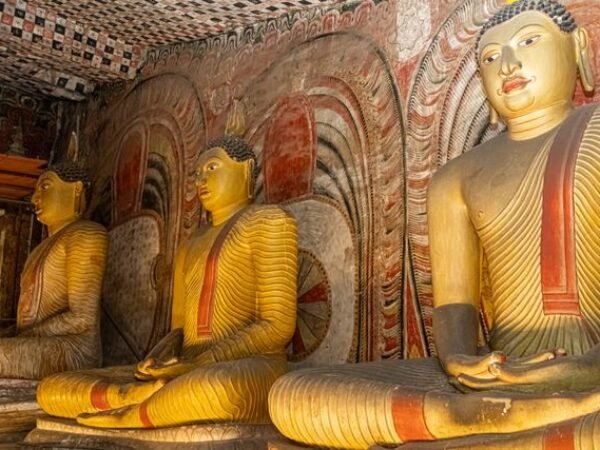
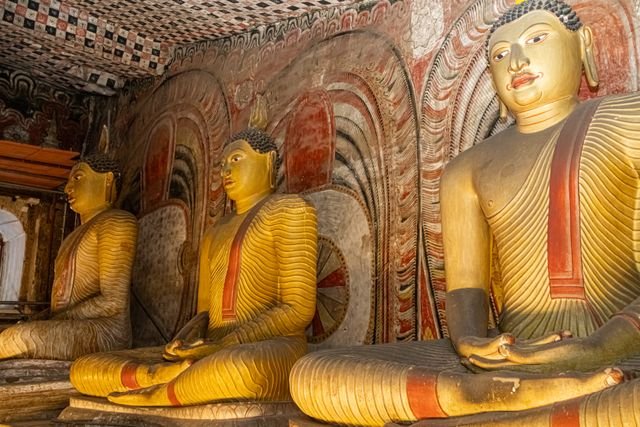
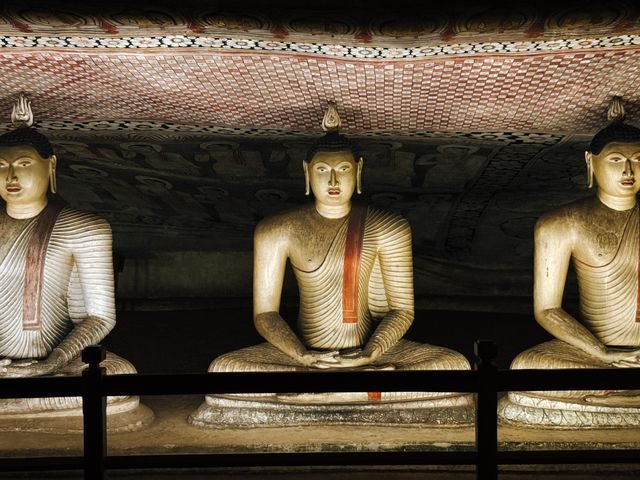
The largest and most impressive cave in the complex, featuring dozens of Buddha statues and beautifully preserved wall and ceiling paintings covering thousands of square meters.
3. Maha Alut Viharaya
This cave contains statues and artwork dating from the Kandyan period, reflecting later additions to the temple.
4. Pachima Viharaya
A smaller but significant shrine featuring seated Buddha statues and intricate decorative elements.
5. Devana Alut Viharaya
The newest cave temple, containing numerous Buddha images and colorful murals.
Golden Buddha Statue and Sacred Statue Collection
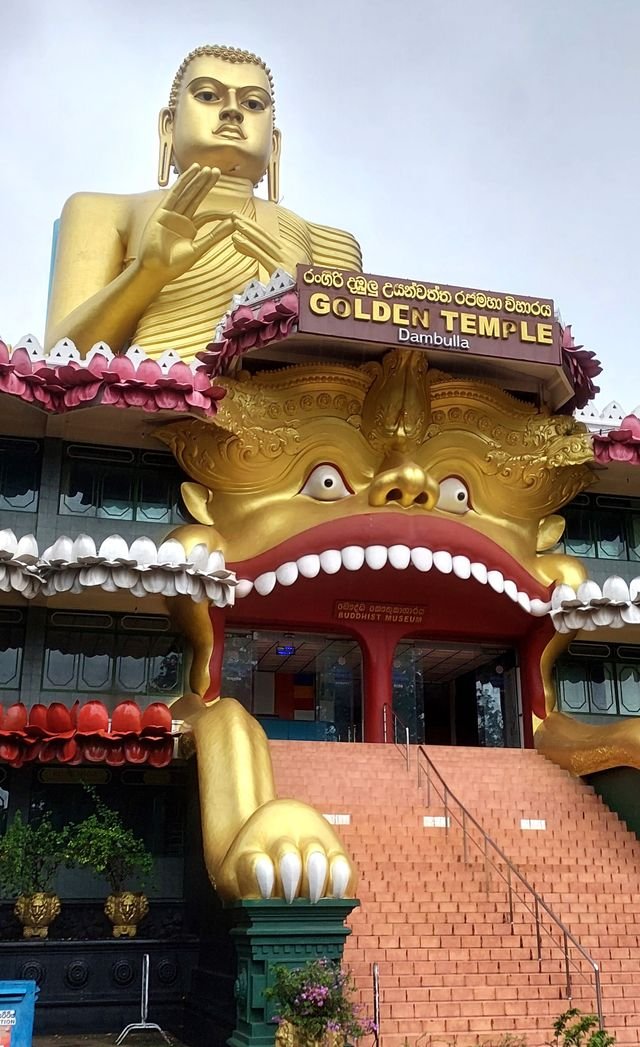
At the base of the temple complex stands the impressive Golden Temple of Dambulla, featuring a towering golden Buddha statue that has become one of the area’s most recognizable landmarks.
Inside the cave temples, visitors can find 153 Buddha statues, 3 statues of Sri Lankan kings, and 4 statues of gods and goddesses, reflecting the site’s rich religious and cultural heritage.
Ancient Murals and Sacred Art
One of Dambulla’s greatest treasures is its collection of Buddhist murals. The caves contain around 2,100 square metres of murals, making it one of the largest collections of Buddhist paintings in Sri Lanka. These paintings depict scenes from the life of the Buddha, important historical events, and religious teachings.
The vibrant colors and remarkable preservation make them some of the finest examples of Buddhist art in South Asia.
What to Expect During Your Visit
Visitors must climb a series of steps to reach the caves, but the effort is rewarded with stunning views across the surrounding landscape. Along the way, you’ll encounter resident monkeys, scenic viewpoints, and impressive rock formations.
Inside the caves, photography is permitted, although visitors should always respect religious customs when taking photographs inside the temple.
Best Time to Visit Rangiri Dambulla Cave Temple
The temple can be visited year-round, though the dry months from December to April generally offer the most comfortable conditions.
The best time of the day to visit Rangiri Dambulla Cave Temple is early in the morning or late in the afternoon when temperatures are cooler and crowds are smaller.
Visitor Tips
- Wear clothing that covers shoulders and knees.
- Remove shoes and hats before entering the temple.
- Carry water, especially during hot weather.
- Visit early to avoid midday heat.
- Combine your trip with nearby attractions such as Sigiriya Rock Fortress and Pidurangala.
Why Rangiri Dambulla Cave Temple Should Be on Your Sri Lanka Itinerary
Rangiri Dambulla Cave Temple is more than just a historic monument. it is a living cultural treasure that has inspired pilgrims and travelers for over two millennia. Its ancient caves, breathtaking artwork, spiritual atmosphere, and UNESCO recognition make it one of the most rewarding places to visit in Sri Lanka.
For anyone exploring Sri Lanka’s cultural heritage, a visit to Dambulla is an experience that should not be missed.