
Esala Perahera Explained: What Happens on Each of the 10 Nights?
The Kandy Esala Perahera is often described as a 10-night festival, but the famous night-time processions are only one part of the wider celebration.
Before the first Kumbal Perahera takes to the streets of Kandy, several important ceremonies take place. And even after the final Randoli Perahera, the celebrations continue with more traditional rituals.
So, the complete Esala Perahera follows this sequence:
What happens in each step?
It Begins with Kap Situweema
Kap Situweema also known as the Kap planting ceremony, marks the beginning of the ceremonial period of the Esala Perahera.
During this ritual, a sanctified young jackfruit (kos) tree sapling prepared and purified with oil, flowers, and incense is cut and planted within the premises of the four main shrines or Devalayas dedicated to Natha, Vishnu, Kataragama and Pattini. It acts as a formal vow and invocation of divine blessings from guardian deities to ensure the festival proceeds safely, smoothly, and successfully.
Once the Kap is planted at an auspicious time, it signals the start of the 4 Devale processions (Devale Peraheras) before the grand public street parades commence.
The Four Devale Peraheras
Following Kap Situweema, the four Devales hold their own internal processions for five consecutive days.
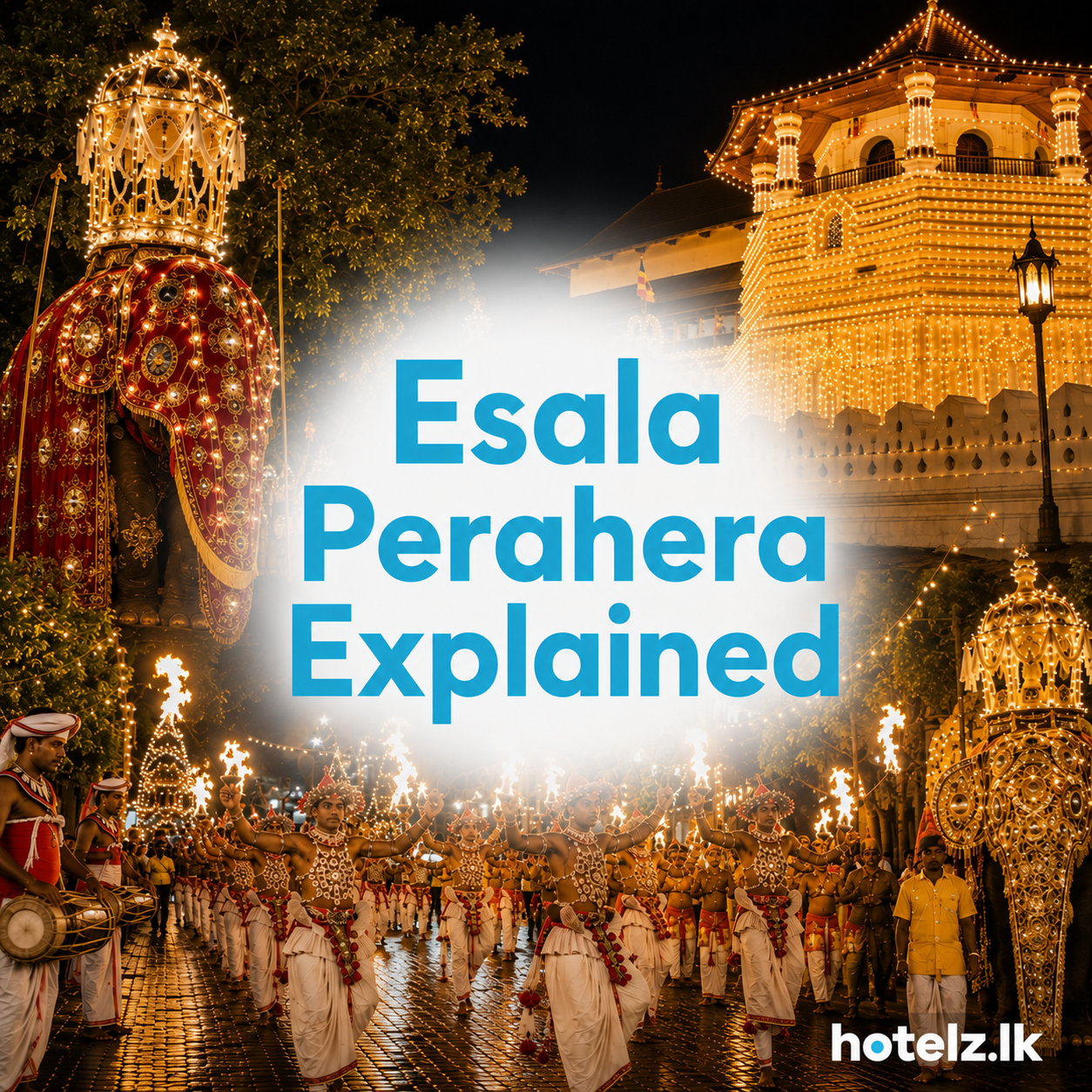
These are known as the Devale Peraheras and take place within the respective shrine precincts of the four major guardian deity temples (Natha, Vishnu, Kataragama, and Pattini). They involve traditional drummers, decorated elephants, flag and canopy bearers, spearmen and the sacred insignia associated with the deities.
These processions are an important part of the festival, but they are different from the large public processions that later move through the streets of Kandy. Once these five days are complete, the main 10-night procession begins.
The First Five Nights: Kumbal Perahera
The first five nights of the Kandy Esala Perahera are known as the Kumbal Perahera.
The four individual shrine processions gather in front of the Sri Dalada Maligawa (Temple of the Sacred Tooth Relic). They combine into a single massive parade, led by the Maligawa Perahera carrying a replica of the sacred relic casket.
The Kumbal processions are generally more modest than the Randoli processions that follow. There is no major separate theme for each of the five Kumbal nights. They are essentially five successive nights of the Kumbal Perahera, with the procession becoming increasingly grand as the festival progresses.
The Last Five Nights: Randoli Perahera
After the five Kumbal nights comes the Randoli Perahera.
The name Randoli refers to the traditional royal palanquins associated with the queens of the Kandyan kings. These final five nights are generally more elaborate, with the procession reaching its greatest scale on the final Randoli night. For many visitors, this is the part of the festival they have been waiting for.
The final Randoli Perahera does not mean the ceremonial activities are immediately over.
Then Comes Diya Kepeema
In the early dawn hours following the final Randoli night, the traditional Diya Kepeema, or water-cutting ceremony, takes place at the Mahaweli River in Getambe.
During this important ritual, a small group of high priests (Kapuralas) from the four deity shrines, temple custodians, traditional drummers, and torchbearers take part in the ceremony. The high priests step into the river to ceremonially “cut” the water with a sacred sword while discarding the previous year’s water and filling new vessels, which invokes timely rains and prosperity.
The Day Perahera
The celebrations then continue with the Dahawal Perahera, or Day Perahera on the day following the final Randoli Perahera.. Unlike the famous processions held at night, this procession takes place during the day time, allowing locals and tourists to witness the performers and elephants clearly in daylight.
This Procession marks the ceremonial conclusion of the Kandy Esala Perahera festival.
So the final conclusion is:
The Kandy Esala Perahera is not simply 10 nights of parades. It is a traditional festival that builds from sacred ceremonies at the Devales to the grand processions through Kandy, before concluding with the water-cutting ceremony and the final Day Perahera.