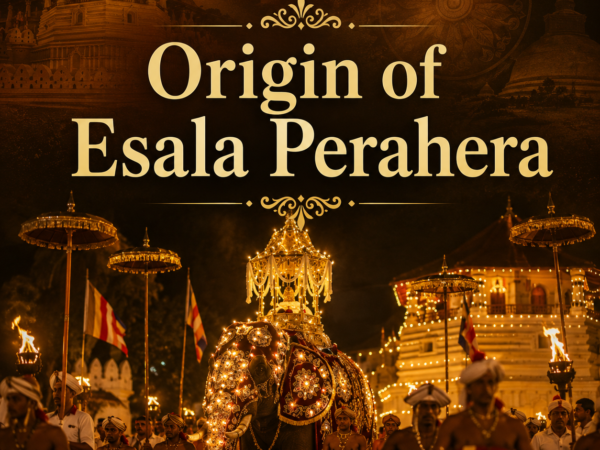

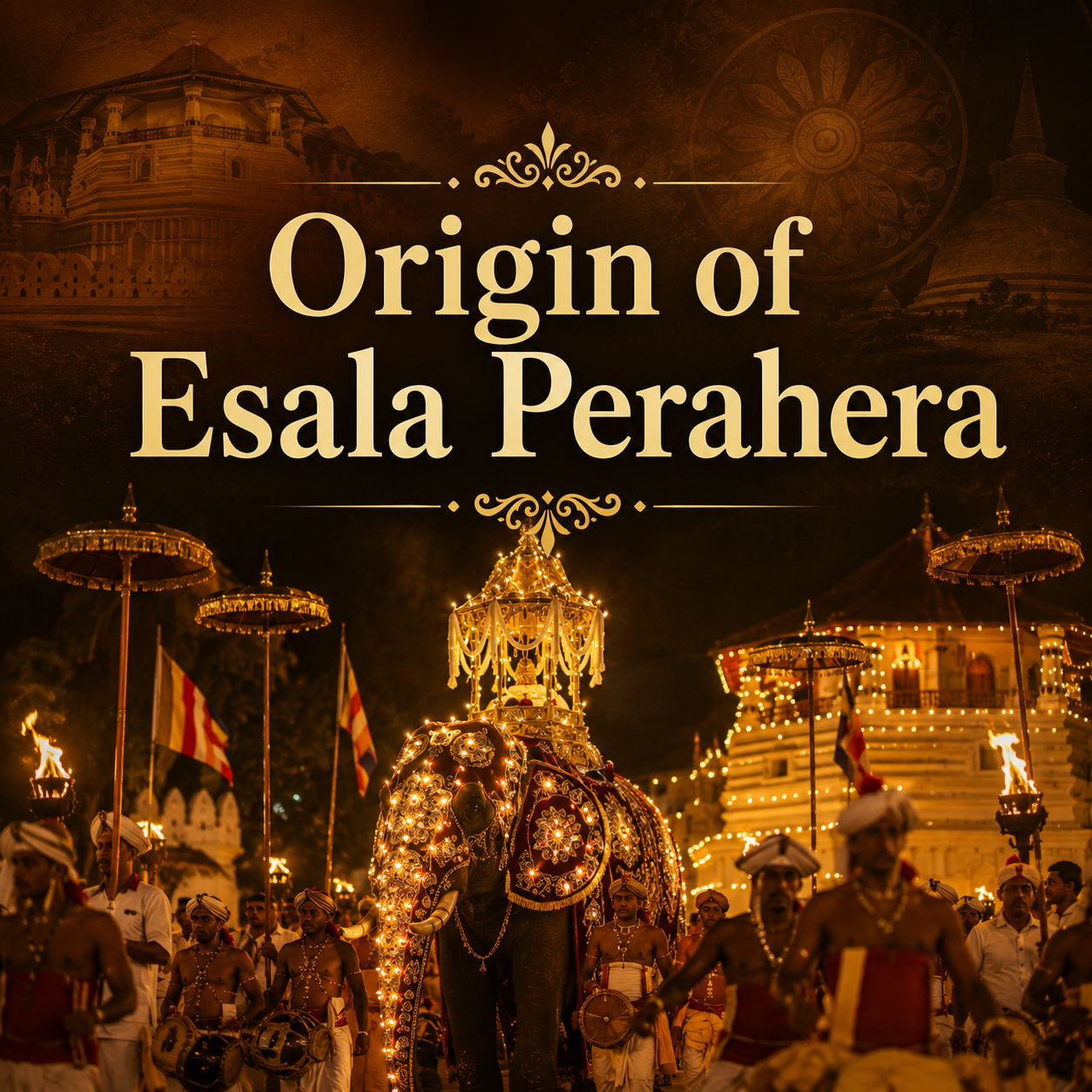
Origin of Esala Perahera: History Behind The Grand Procession
For more than 1,700 years, Esala Perahera has been one of Sri Lanka’s most important religious and cultural celebrations. Held every year in the historic city of Kandy, this grand procession honors the Sacred Tooth Relic of Lord Buddha. But behind this world-famous celebration lies a remarkable story of ancient rituals, royal traditions, and centuries of history that shaped the festival we see today.
- Foundation of Esala Perahera
- Arrival of The Sacred Tooth Relic
- Journey of The Sacred Tooth Relic
- Birth of The Present Day Esala Perahera
- A Festival That Survived Centuries
- More About Esala Perahera?
Foundation of Esala Perahera
Long before Buddhism became established in Sri Lanka, people held religious processions to ask for rain, good harvests, protection from disease, and blessings from the gods. These ceremonies were especially important for farming communities, where a successful harvest depended on seasonal rains. Music, dancing, drumming, and offerings were all part of these early rituals.
Although these ancient processions looked very different from today’s Esala Perahera, they laid the foundation for the grand celebration that would develop over the centuries.
Arrival of The Sacred Tooth Relic
The story of today’s Esala Perahera truly began with the arrival of the Sacred Tooth Relic of Lord Buddha in Sri Lanka during the 4th century AD.
According to historical chronicles, Prince Dantha and Princess Hemamala secretly brought the Sacred Tooth Relic of Lord Buddha from the Indian kingdom of Kalinga to Sri Lanka to protect it during a time of conflict. To keep the relic safe on their journey, Princess Hemamala is said to have hidden it in her hair.
When they arrived in Anuradhapura, they presented the relic to the ruler of the island, King Sirimeghavanna. By this time, Buddhism was already well established in Sri Lanka, and the Sacred Tooth Relic became one of the country’s most important religious treasures.
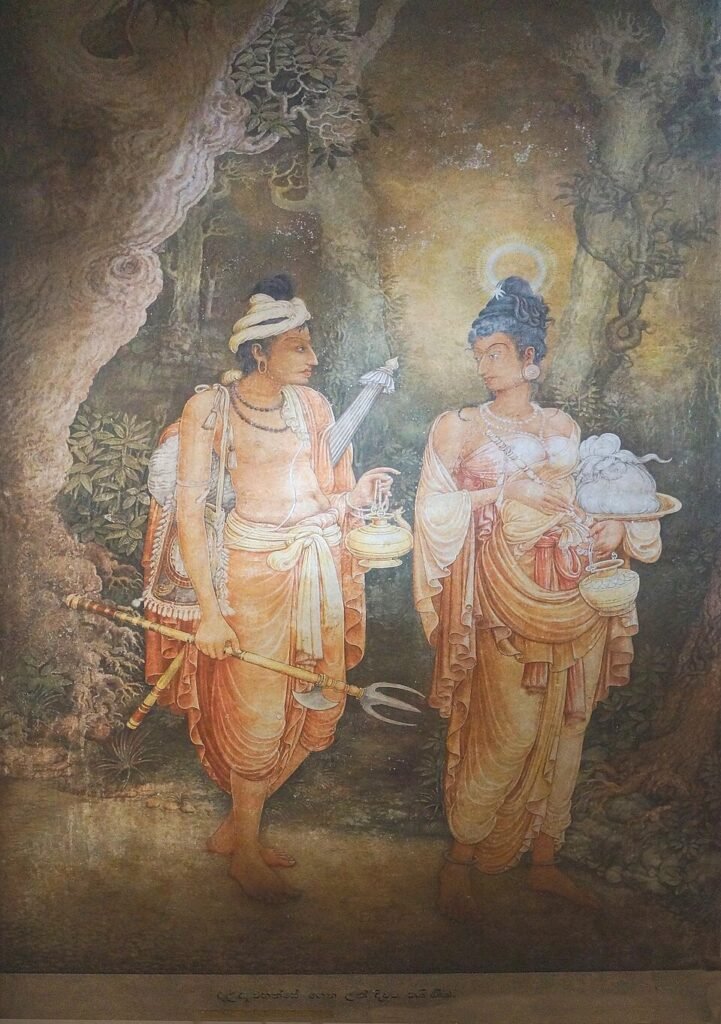
Image Source: Pierre André Leclercq, CC BY 4.0, via Wikimedia Commons
Journey of The Sacred Tooth Relic
With time, The Sacred Tooth Relic was not only a religious symbol, it became the ultimate symbol of the right to rule. Whoever possessed it held the legitimate sovereignty of the island.
As the royal capital changed over time, the relic moved with it to ensure its safety and to remain under the protection of the reigning king. Its journey followed the history of Sri Lanka itself. Today, the relic remains in Kandy, where it continues to be one of the most sacred objects in Sri Lanka.
Chronological Journey of the Sacred Tooth Relic
Birth of The Present Day Esala Perahera
By the time Kandy became the capital of the last Sinhalese kingdom, annual processions dedicated to the four guardian deities (Natha, Vishnu, Kataragama, and Pattini) were already taking place. These processions were held to honor the deities and seek their blessings for the kingdom and its people.
The major turning point came during the reign of Kandyan King Kirti Sri Rajasinghe (1747–1782). Buddhism experienced an important revival in 1753, with the arrival of Buddhist monks from Siam (modern-day Thailand) and the higher ordination of monks was restored in Sri Lanka after it had declined for many years. The king strongly supported this revival and worked to strengthen Buddhist traditions throughout the kingdom.
According to historical chronicles, he requested that the Sacred Tooth Relic also be honored during the annual Esala procession. Since the relic itself never leaves the Temple of the Sacred Tooth Relic, a beautifully decorated casket representing it was placed on the lead elephant and carried in the procession.
This brought together the annual processions of the four devales with the Temple of the Sacred Tooth Relic, creating a single grand procession that honored both Buddhist traditions and Sri Lanka’s guardian deities.
More than 250 years later, this format continues today, making Esala Perahera one of the country’s most important religious and cultural celebrations.
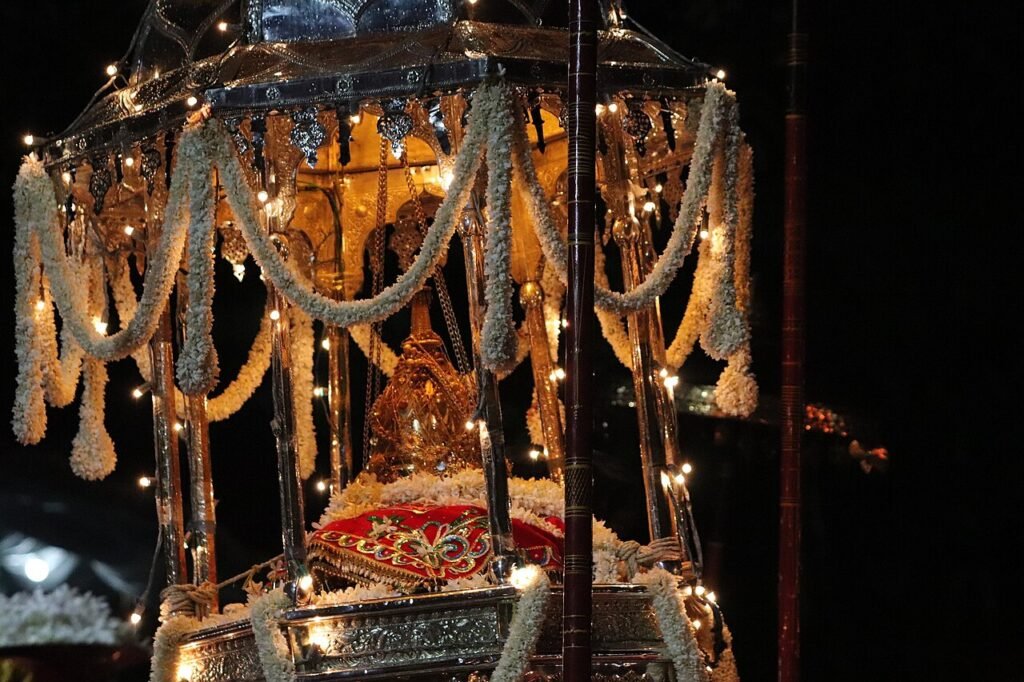
The casket representing the Sacred Tooth Relic
Image Source: Phsmet, CC BY-SA 4.0, via Wikimedia Commons
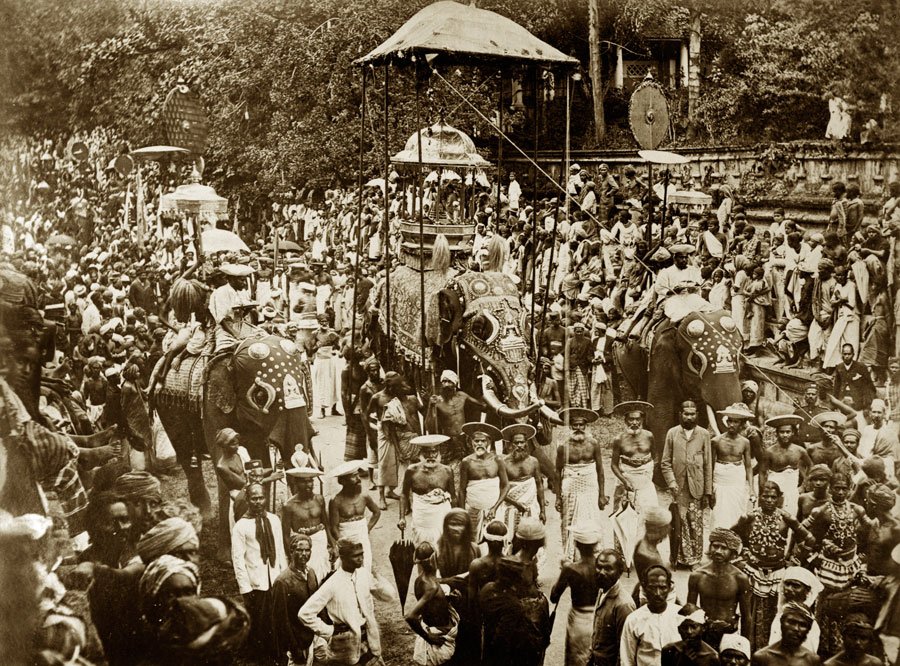
Esala Perehera around 1885
A Festival That Survived Centuries
Over the centuries, Sri Lanka experienced political change, foreign invasions, and colonial rule under the Portuguese, Dutch, and British. Despite these challenges, Esala Perahera never disappeared.
Kings, temple custodians, craftsmen, dancers, drummers, and local communities continued to preserve the traditions. Many of today’s performers still come from families that have participated in the procession for generations, passing their skills from parents to children.Thanks to their dedication, the festival continues to thrive more than 1,700 years after its origins.
The history of Esala Perahera is more than a story of kings and temples. It is the story of a tradition that has adapted to changing times while staying true to its purpose.
From ancient rain rituals and the arrival of the Sacred Tooth Relic to the magnificent procession that fills the streets of Kandy today, every chapter has added something to the festival’s rich history.
Want to know more about Esala Perahera?
Read: Esala Perahera: Guide to Sri Lanka’s Most Sacred Cultural Festival