
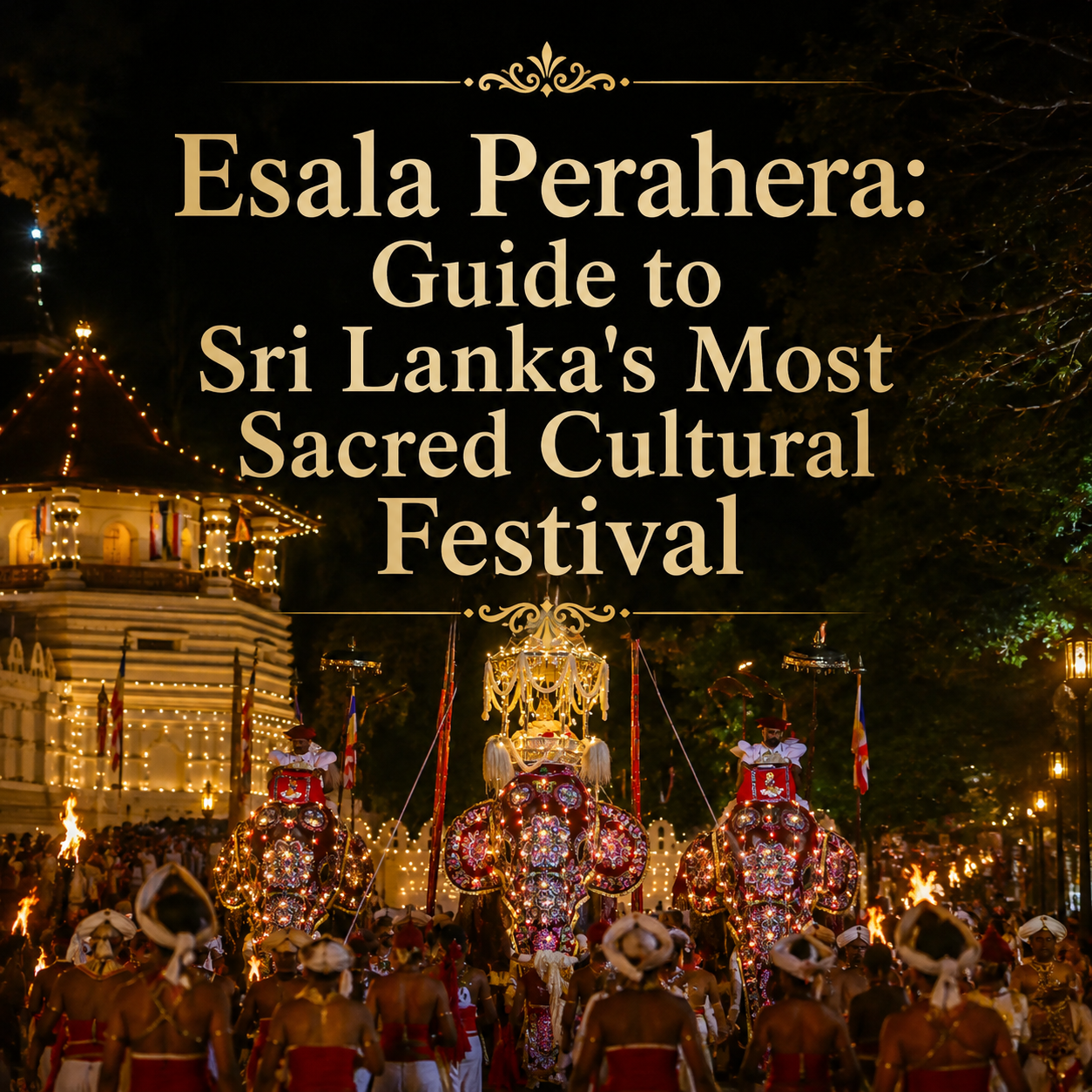
Esala Perahera: Guide to Sri Lanka’s Most Sacred Cultural Festival
Every year, the streets of Kandy come alive with the sound of traditional drums, the glow of flaming torches, beautifully decorated elephants, and hundreds of dancers dressed in colorful costumes. This is Esala Perahera, one of the oldest and most famous cultural festivals in Asia.
More than just a parade, Esala Perahera is a religious and cultural celebration that has been held for centuries. It attracts thousands of local and international visitors who come to witness a tradition that has been passed down from one generation to the next.
Whether you’re visiting Sri Lanka for the first time or planning your next trip, Esala Perahera is an experience you must vitness.
At a Glance

 Location: Kandy, Sri Lanka
 When    : Usually July or August (dates follow the lunar calendar)
 Duration: 10 nights
 Tickets : Free street viewing or paid reserved seating
- What Is Esala Perahera?
- How the Festival Unfolds
- Meet the Stars of the Parade
- Best Places to Watch Esala Perahera
- Tips for Visitors
- Explore Kandy Beyond the Festival
- FAQ About Esala Perahara
What Is Esala Perahera?
Esala Perahera is an annual Buddhist festival held in the historic city of Kandy. With a history of more than 1,700 years, it is one of the oldest and most celebrated cultural festivals in Asia. The festival honors the Sacred Tooth Relic of Lord Buddha, one of the most important religious treasures in Sri Lanka.
However, the actual Tooth Relic never leaves its shrine inside the Temple of the Tooth. Instead, a beautifully decorated casket representing the relic is carried through the streets on the lead elephant during the procession.
Each year, thousands of performers, including traditional dancers, drummers, fire performers, whip crackers, and torch bearers, take part in the festival, creating a spectacular display of Sri Lanka’s rich cultural heritage. These performers belong to families that have performed in Esala Perahera for generations, continuing traditions that have been preserved for centuries.
Although the festival is deeply connected to Buddhism, people from many cultures and religions around the world come together to experience and respect this unique celebration.
Want to discover the origin of Esala Perahera?
Read: Origin of Esala Perahera: History Behind The Grand Procession
How the Festival Unfolds
Esala Perahera is unlike any other festival in Sri Lanka. The festival takes place over 10 nights, with each procession becoming larger and more impressive.
| Stage | What Happens |
|---|---|
| Kap Situveema | The festival officially begins with this traditional ceremony. |
| Kumbal Perahera | The first 5 nights take place with fewer performers and smaller crowds. |
| Randoli Perahera | The final 5 nights become larger, brighter, and much more crowded. |
| Final Perahera | The biggest and most spectacular procession of the festival. |
| Water Cutting Ceremony | A traditional ceremony that marks the end of the festival. |
Each festival day as the sun goes down, the streets fill with thousands of people waiting for the procession to begin. One by one, performers enter the streets.
- Whip crackers announce the start of the parade.
- Traditional drummers create powerful rhythms that echo through the city.
- Kandyan dancers perform energetic dances.
- Fire dancers spin burning torches through the air.
- Decorated elephants walk proudly through the procession.
- Musicians and torch bearers complete the spectacular display.
The atmosphere is exciting from beginning to end, leaving every visitor satisfied and amazed.
Meet the Stars of the Parade
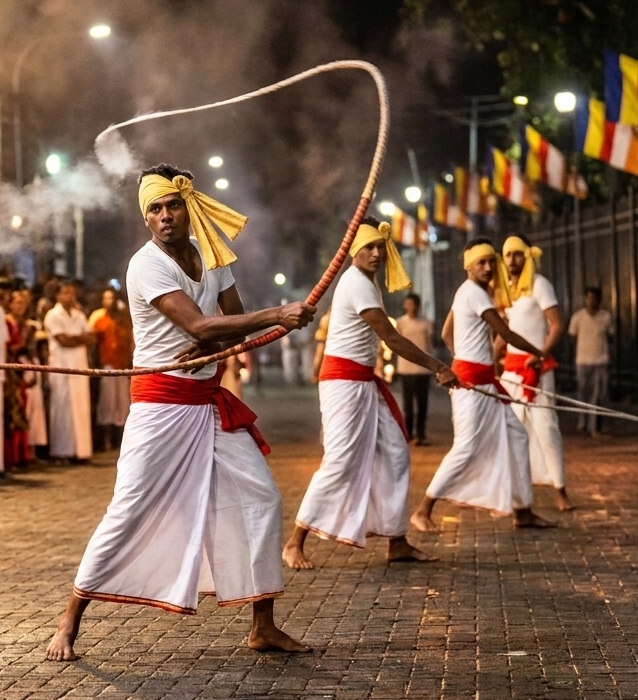
Whip Crackers
Before the parade arrives, whip crackers clear the route with loud cracks that signal the beginning of each section of the procession.
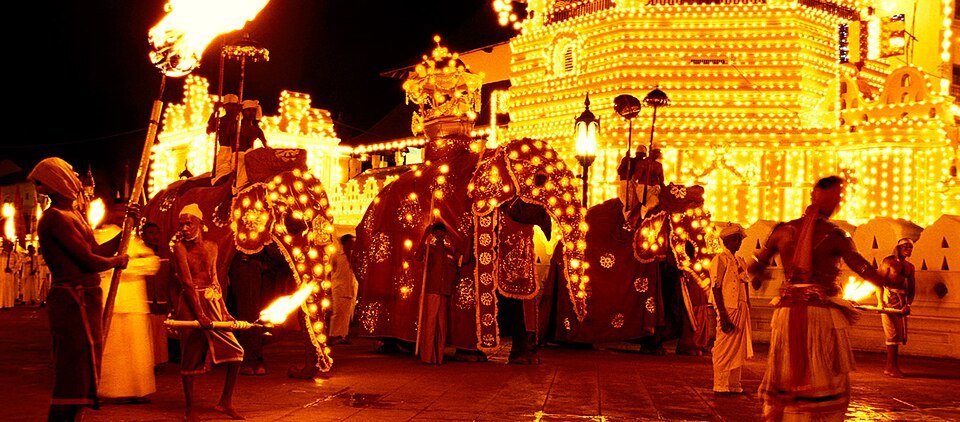
The Elephants
The decorated elephants are the most famous parts of Esala Perahera. They wear beautifully embroidered costumes, often decorated with colorful fabrics and lights. The lead elephant, which carries the sacred casket representing the Tooth Relic, is one of the main highlights of the procession.
Image Source: Ashan96, CC BY-SA 4.0, via Wikimedia Commons
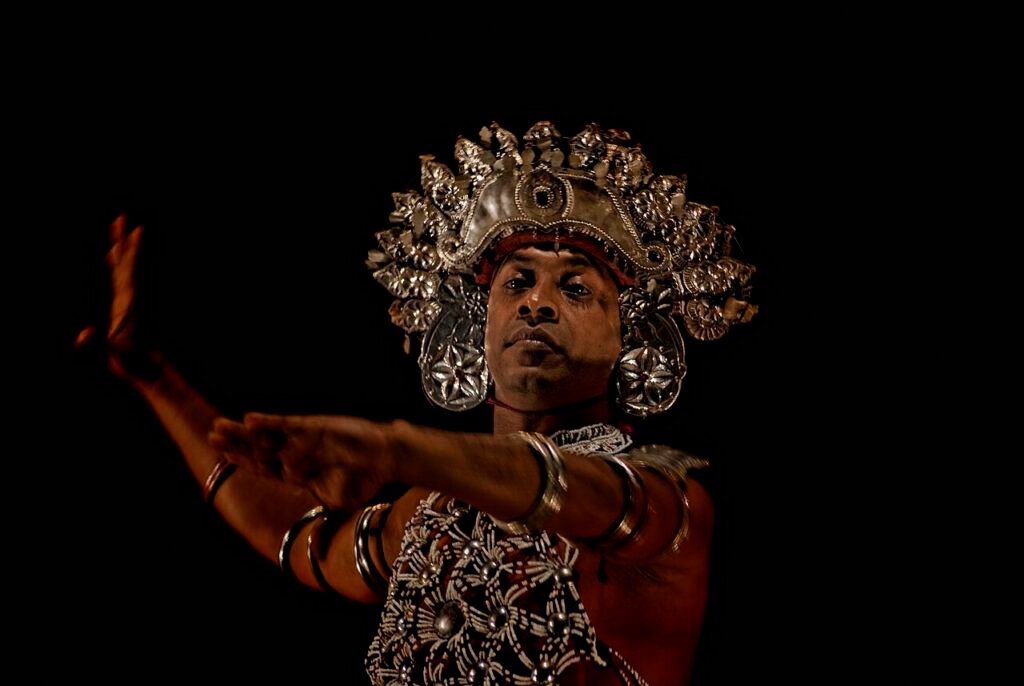
Kandyan Dancers
These dancers perform one of Sri Lanka’s oldest traditional dance styles that have been passed down through generations. They represent an important part of Sri Lanka’s cultural heritage. Their colorful costumes, fast movements, and graceful performances make them a favorite among visitors.
Image Source: Philip Nalangan, CC BY-SA 4.0, via Wikimedia Commons
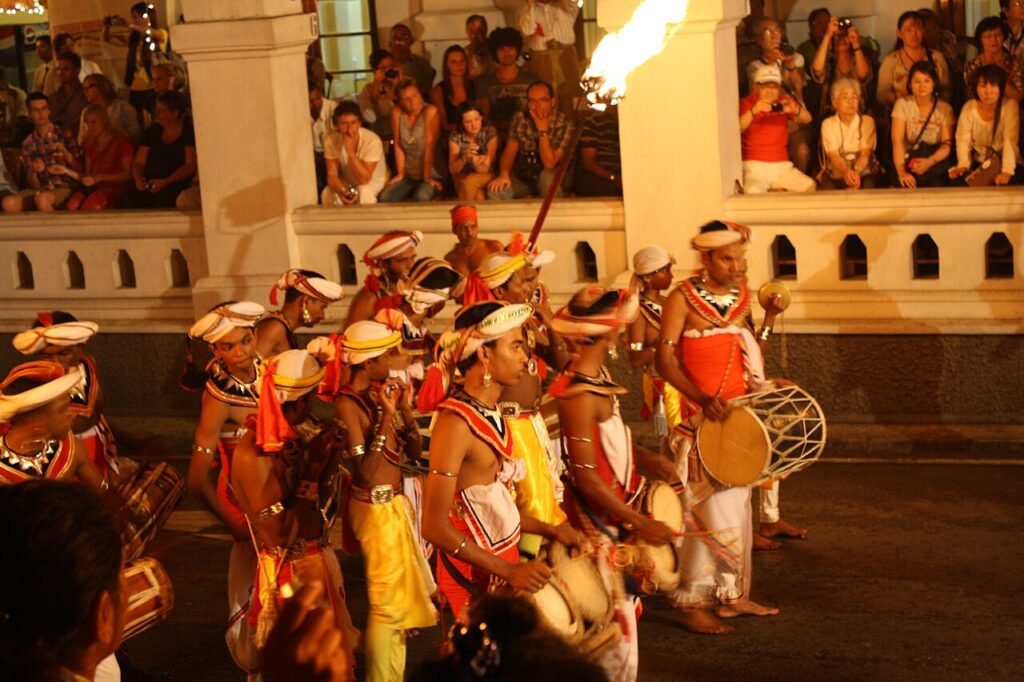
Traditional Drummers
The sound of traditional drums is heard throughout the entire procession. The steady rhythm brings energy to the festival and has been part of the celebration for centuries. Different groups of drummers perform along the route, adding energy and excitement to the festival.
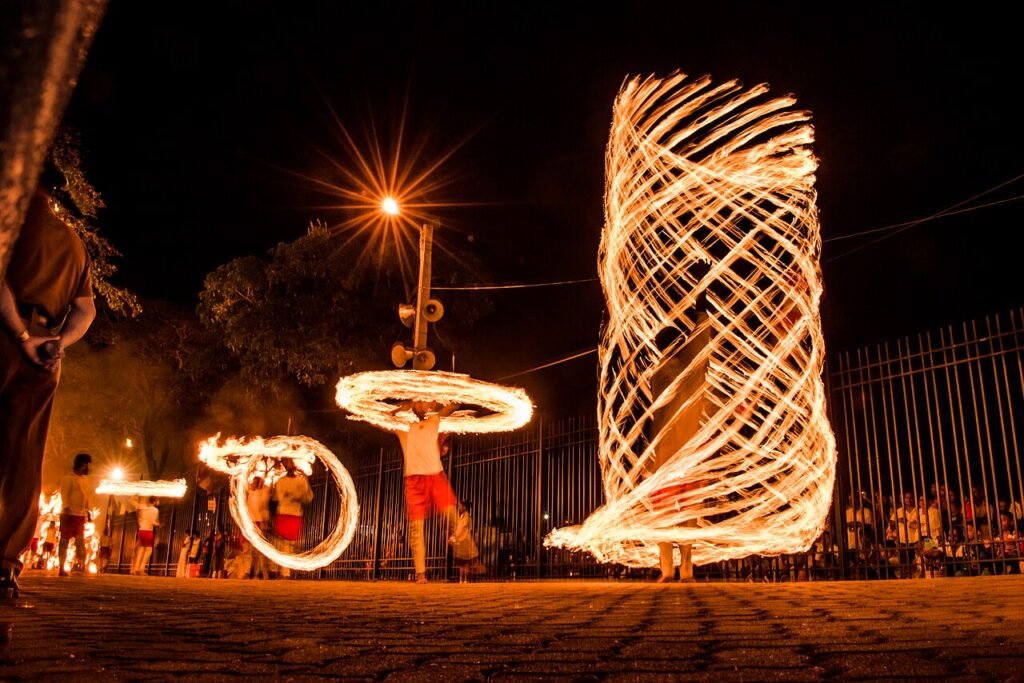
Fire Dancers
One of the crowd favorites, fire dancers spin flaming torches and perform impressive routines that creates amazing patterns of light. Their performances add excitement to the procession.
Image Source: Sachin Kaveesha Fernando, CC BY-SA 4.0, via Wikimedia Commons
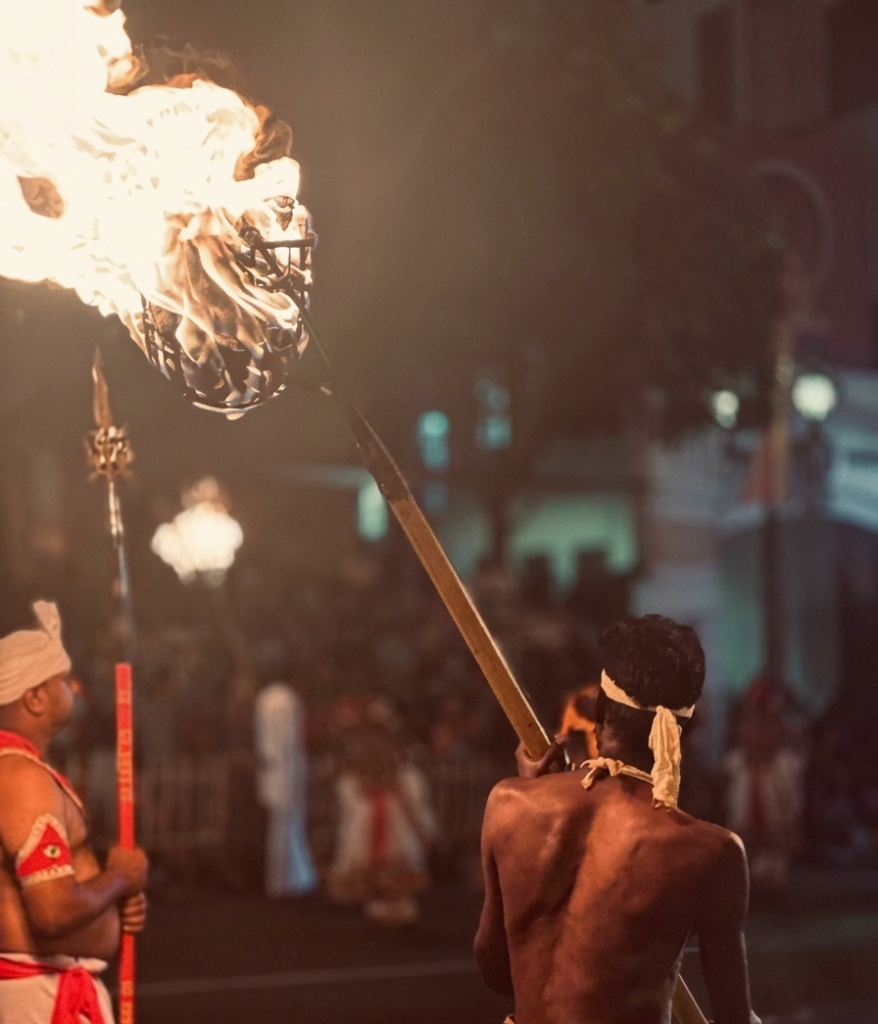
Torch Bearers
Hundreds of torch bearers help light the streets, creating a magical atmosphere throughout the night that makes Esala Perahera a memorable experience.
Best Places to Watch Esala Perahera
Some of the best places to enjoy the procession include:
- Around Kandy Lake
- Dalada Veediya near the Temple of the Tooth
- Reserved grandstand seating
- Hotels and restaurants with balconies overlooking the route
Tips for Visitors
✔ Arrive at least 2–3 hours early to get a good viewing spot.
✔ Check the official procession route and timings before you go, as they may vary during the festival.
✔ Wear light, comfortable clothing, as evenings can still be warm.
✔ Avoid using flash near performers and elephants.
✔ Be respectful and avoid blocking other spectators.
✔ Dress modestly since this is an important religious event.
✔ Bring drinking water.
✔ Expect heavy traffic and road closures around Kandy.
✔ Book your accommodation well in advance, as hotels fill up quickly during the festival.
Explore Kandy Beyond the Festival
While Esala Perahera is the main attraction, Kandy has plenty to offer during the day. Don’t miss:
- The Temple of the Sacred Tooth Relic
- A walk around Kandy Lake
- The Royal Botanic Gardens at Peradeniya
- Bahirawakanda Buddha Statue
- Kandy Market for local fruits, spices, handicrafts, and souvenirs
- Small cafés serving traditional Sri Lankan tea and snacks
Spending an extra day or two allows you to enjoy both the festival and the city’s many attractions.
FAQ About Esala Perahara
Is Esala Perahera free to watch?
Yes. You can watch from many public areas along the route for free. Reserved seating is also available for an extra cost.
Which nights are the best?
The final five Randoli Perahera nights are the most spectacular, with larger processions and more performers.
How long does the procession last?
The procession usually lasts between three and five hours, depending on the night.
When should I book my hotel?
As early as possible. Hotels in Kandy often sell out months before the festival begins.
What should I wear?
Wear comfortable and modest clothing, as the festival is a religious event.
Can children attend?
Yes. Many families attend the festival, although younger children may find the crowds and loud drums overwhelming.
Experience a Tradition Like No Other
Esala Perahera is much more than a parade. It is a celebration of Sri Lanka’s history, faith, music, dance, and culture that has continued for centuries. Whether you come for the decorated elephants, the traditional performances, or simply the unforgettable atmosphere, Esala Perahera offers a unique experience that few festivals in the world can match.
If you’re planning to visit Sri Lanka during July or August, adding Esala Perahera to your itinerary is well worth it. Just remember to book your accommodation early and arrive prepared for one of the country’s most memorable events.